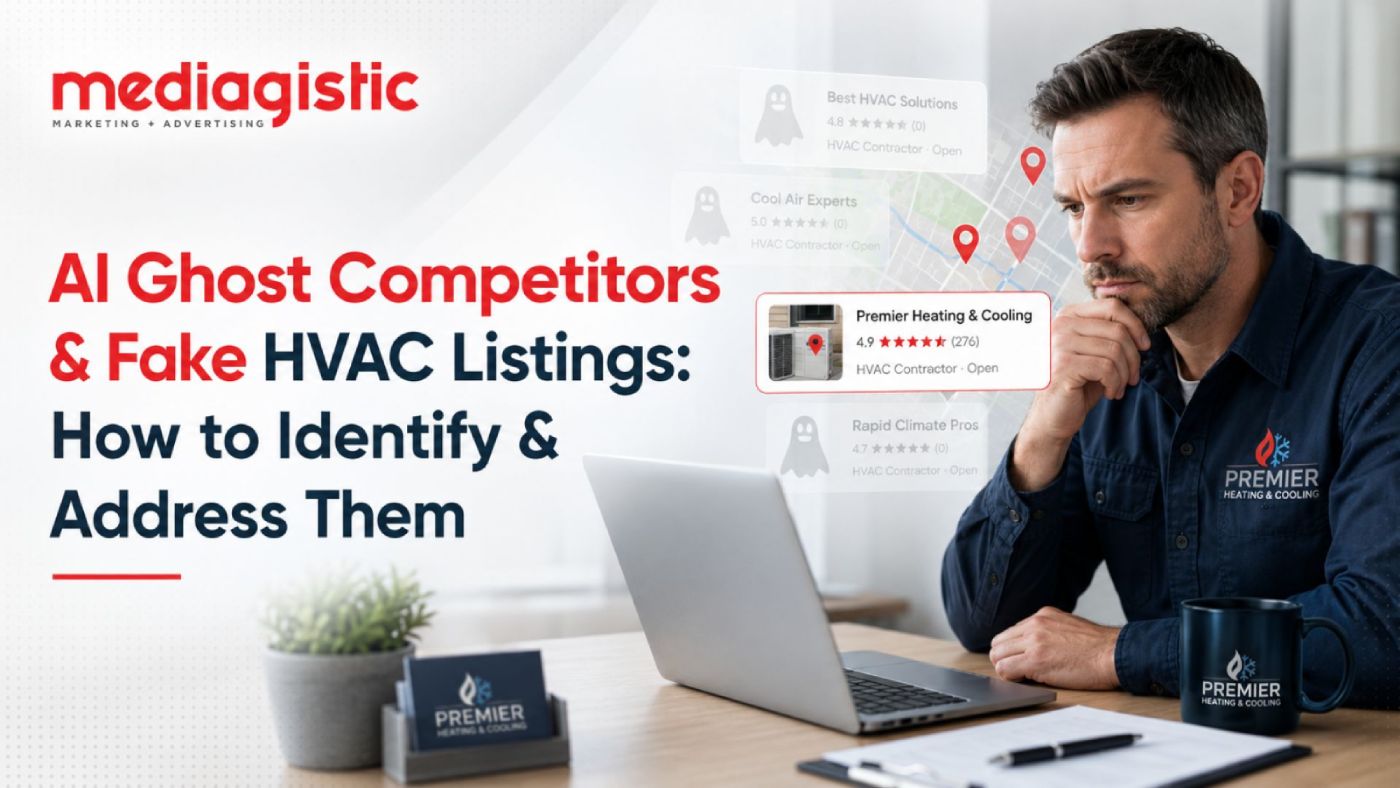
AI Ghost Competitors & Fake HVAC Listings Are Getting Harder to Spot. Here’s What Contractors Should Do Now.
Orlando HVAC contractors are dealing with an unusually aggressive wave of fake HVAC websites and listings. Recent reporting from FOX 35 Orlando, ACHR News, and Homepros shows dozens of suspicious HVAC sites appearing in Google results with local phone numbers, questionable addresses, duplicated layouts, fake-looking reviews, and polished pages that appear to be AI-generated.
But the bigger issue is not limited to Orlando. Fake home-service listings, lead hijacking, map spam, and unlicensed contractor activity have been problems for years. What feels different now is the speed and scale. AI makes it easier to spin up convincing websites, rewrite local landing pages, generate fake brand names, and flood search results faster than many legitimate businesses can respond.
Orlando Is the Warning Flare
The Orlando situation stands out because of how concentrated and visible the problem has become. FOX 35 Orlando reported that searches for terms like “AC repair Orlando” were surfacing sites that did not appear to represent real local HVAC companies. Some used Orlando addresses that pointed to vacant buildings, neighborhoods, or unrelated businesses. Others used local phone numbers that forwarded callers somewhere else.
For real contractors, this can create immediate business disruption. Fake listings can absorb demand, confuse homeowners, and make reputable companies harder to find. Contractors may see higher CPCs, lower lead quality, fewer qualified calls, and a slowdown in organic or local lead flow while fake competitors crowd the search results.
That disruption is especially painful in HVAC, where high-intent searches often come from homeowners who need help quickly. If a fake listing captures that call, the legitimate contractor loses the opportunity and the homeowner may end up with an unlicensed or uninsured provider.
This Is Not a New Problem, But AI Can Make It Worse
Fake local listings are not new. Google has been fighting spam in the Map Pack for years, and home-service scams have shown up in multiple markets. What is changing is how easy these schemes are becoming to scale.
In 2026, the U.S. Department of Justice sued B.E.S.T. GDR, doing business as Premium Home Service, and its owner. According to Homepros, the lawsuit alleges the company created thousands of websites and more than 15,000 fake Google Search and Maps profiles for fictitious HVAC, plumbing, and electrical businesses. The Minnesota Attorney General also filed suit, alleging the company posed as hundreds of fictitious local businesses throughout Minnesota.
Florida has seen related issues too. In a prior enforcement action, the Hillsborough County Sheriff’s Office announced 118 arrests tied to unlicensed contracting after a nine-month investigation into construction fraud activity. That case was not about AI-generated websites, but it points to the same core problem: homeowners often struggle to verify who they are hiring before they let someone into their home.
AI adds another layer. Scammers no longer need much time or skill to make a fake contractor look real online. A generic name, a stock photo, a local phone number, a basic website, and SEO-heavy copy can create enough confusion to siphon clicks and calls.
Contractors Should Monitor the Market Like They Monitor Reviews
Contractors cannot control every fake listing that appears, but they can catch problems earlier. Local search monitoring should become a regular part of the marketing routine, especially in competitive markets where Google Maps, Local Services Ads, and organic search drive booked jobs.
Start by checking the places homeowners are most likely to search:
- Google Maps
- Google Local Services Ads
- Organic Google results
- BBB listings
- Yelp and other major directories
- Local service-area searches
Look for red flags that suggest a listing may not represent a legitimate local contractor:
- No visible license number
- Duplicate or suspicious addresses
- Addresses tied to vacant buildings, stores, or homes
- Stock photos instead of real team or truck photos
- Generic brand names built around service keywords
- Repeated review language across multiple listings
- Phone numbers that forward to another company
- BBB claims that do not match the BBB website
One suspicious detail does not always prove fraud. Patterns matter. If several listings share similar layouts, vague company information, thin licensing details, repeated reviews, and questionable addresses, document what you find and report it.
Report Fast, Then Strengthen What You Control
Reporting fake listings can be slow and frustrating, but it still matters. Contractors should collect screenshots, URLs, phone numbers, addresses, search terms, and dates. Then report the issue through the relevant platform or agency.
Helpful reporting channels may include:
- Google Business Profile reporting tools
- Google Local Services Ads support
- Google Safe Browsing for deceptive websites
- The Florida Department of Business and Professional Regulation
- The Better Business Bureau when BBB marks or claims are misused
At the same time, contractors should tighten every trust signal they control. Make your license number easy to find on your website, Google Business Profile, Local Services Ads profile, landing pages, and directory listings. Use real team photos, real truck photos, verified reviews, years in business, service-area details, financing disclosures, and clear local contact information.
This is where real companies have an advantage. A fake contractor can copy keywords. It is much harder to copy a real local history, a licensed team, a strong review profile, branded trucks, community presence, and consistent business information across the web.
Tell Customers How to Verify Before They Book
Contractors should also communicate directly with customers. A short email, social post, or website notice can help homeowners avoid scams while reinforcing why your company is safe to choose.
Tell customers that fake HVAC listings are showing up in some markets and give them simple ways to protect themselves. Encourage them to verify the company name, check the license number, confirm the phone number, read reviews carefully, and be cautious with unusually low quotes, cash-only jobs, vague company names, or companies that cannot clearly explain who will perform the work.
For Florida homeowners, contractors can point customers to the DBPR license lookup and remind them to verify that the license matches the company they are hiring. Keep the message calm and practical. The goal is not to scare people. The goal is to help them make a safer decision.
Scam listings may create short-term noise, but trust still wins. Contractors that monitor local search, report bad actors, and make their credibility easy to verify will be in a stronger position when homeowners are trying to decide who to call.
Need help protecting your HVAC company’s local visibility? Mediagistic helps contractors strengthen search performance, improve lead quality, and build trust across the full customer journey. Talk to our team about your local marketing strategy.
You May Also Like
Google LSAs’ Lead Charge Policy Is Changing Oct. 1: What Contractors Need to Know
September 10, 2026For home services contractors running Google Local Services Ads, answering the phone is about to have an even more direct impact on… Continue Reading Google LSAs’ Lead Charge Policy Is Changing Oct. 1: What Contractors Need to Know…

Mediagistic and Contractor Commerce Help Contractors Turn More Website Traffic Into Revenue
September 3, 2026The partnership connects marketing, website conversion and online buying to create a better homeowner experience and more value from every lead. TAMPA,… Continue Reading Mediagistic and Contractor Commerce Help Contractors Turn More Website Traffic Into Revenue…

6 Common Phishing Scams that HVAC Business Owners Need to Know
August 28, 2026For HVAC business owners, managing a growing home-service company means you’re constantly on the go. You’re juggling dispatch boards, supply house orders,… Continue Reading 6 Common Phishing Scams that HVAC Business Owners Need to Know…